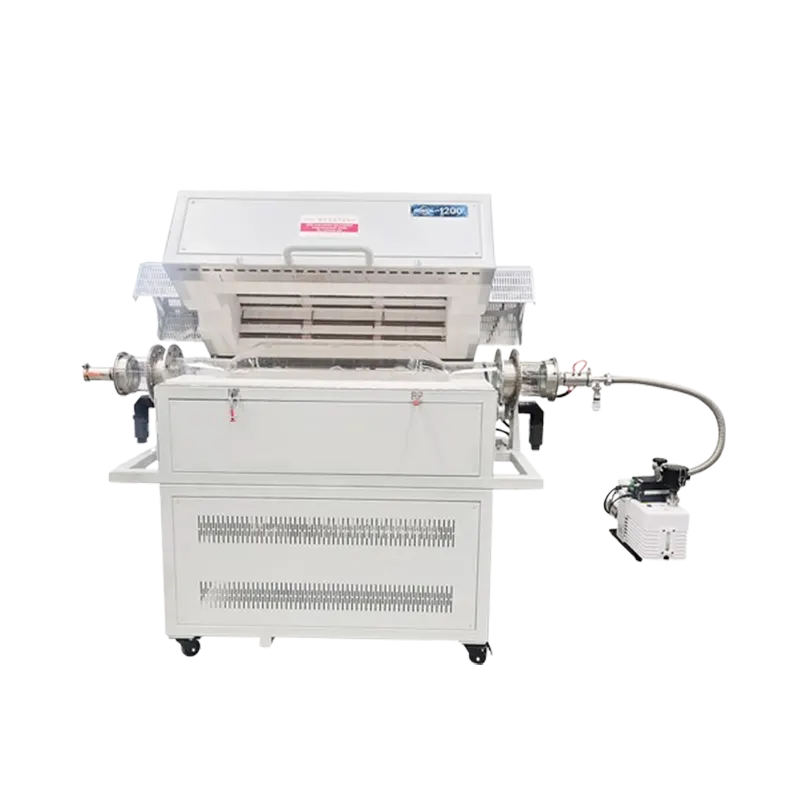
1600°C High Temperature Vacuum Furnace for Sintering and Heat Treatment
High-performance vacuum furnace capable of reaching 1600°C for sintering, brazing, and annealing of advanced materials under high vacuum or protective atmosphere.
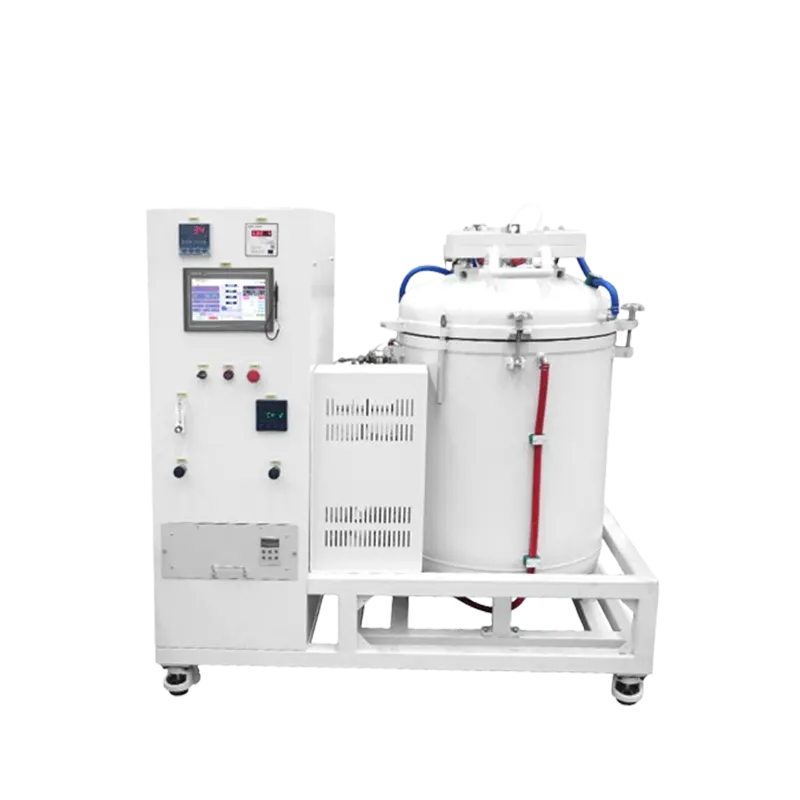
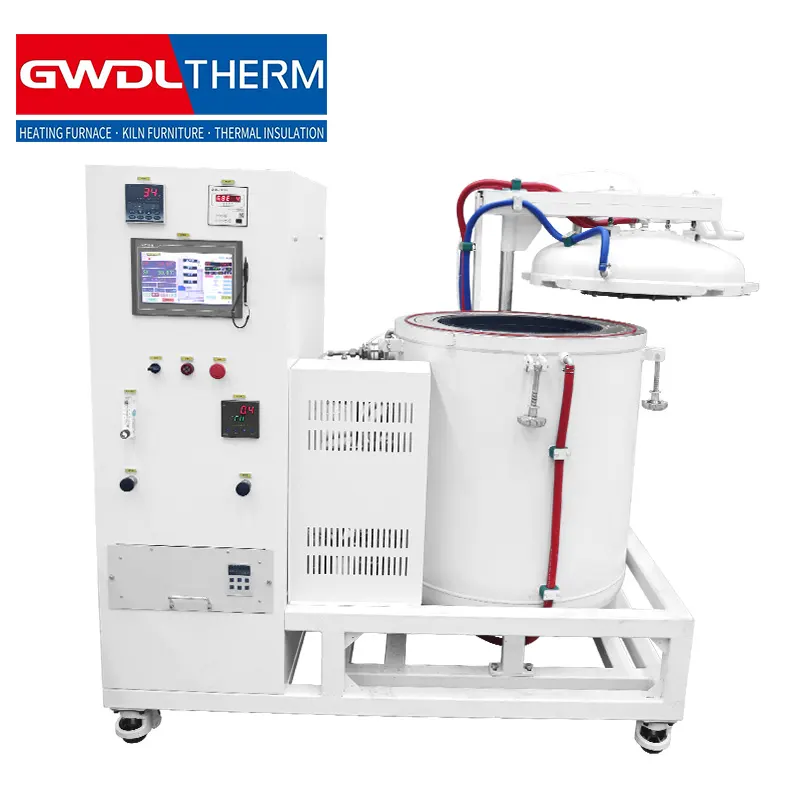
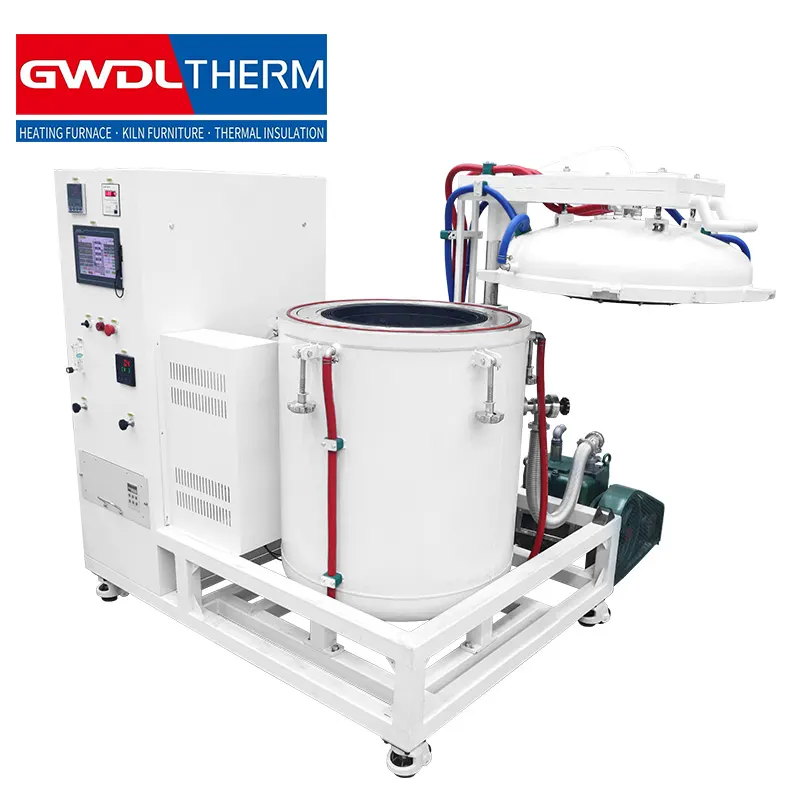
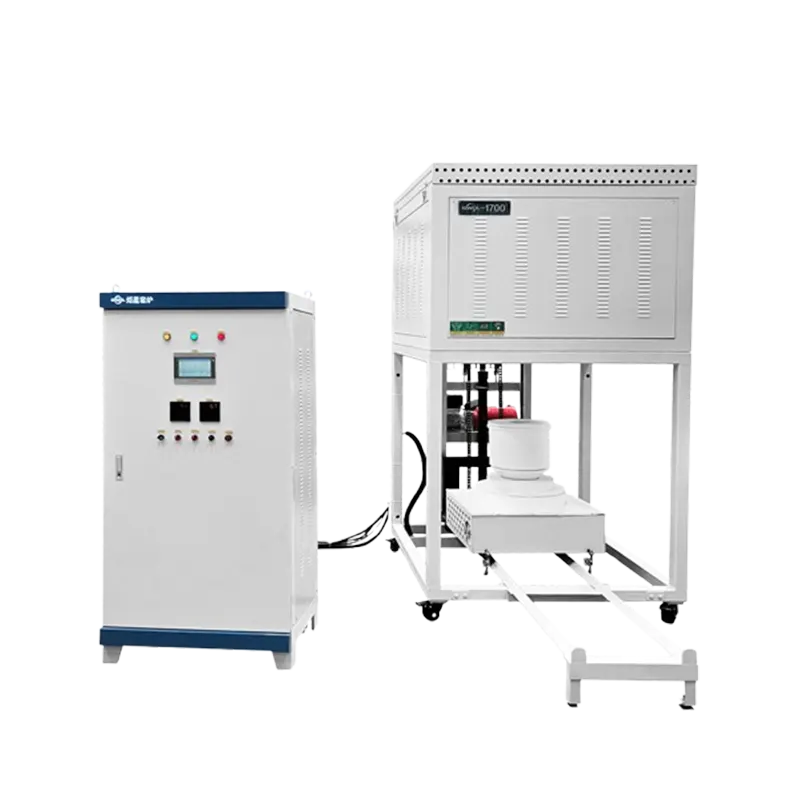
The 1600°C vertical top-loading vacuum atmosphere lift furnace Certified by Ce is a high-performance thermal processing system designed for sintering, brazing, annealing, and heat treatment of advanced materials under vacuum or controlled atmosphere. With a 250mm diameter by 500mm height effective working zone, molybdenum lanthanum alloy heating elements, and a sophisticated multi-layer metal radiation shield, this furnace delivers exceptional temperature uniformity and atmospheric purity for demanding research and production applications.
Product Features
Vertical Top-Loading Structure with Lift Mechanism
The furnace adopts a vertical top-loading configuration with an integrated lift mechanism driven by motor, reducer, and lead screw assembly. The 50mm diameter 45# steel lift shaft guided by two sliding bearings ensures smooth and stable movement of the furnace cover. This top-opening design significantly facilitates loading and unloading of workpieces, particularly suitable for rod-shaped, disc-shaped, and cylindrical parts that require vertical orientation during thermal processing.
Molybdenum Lanthanum Alloy Heating System
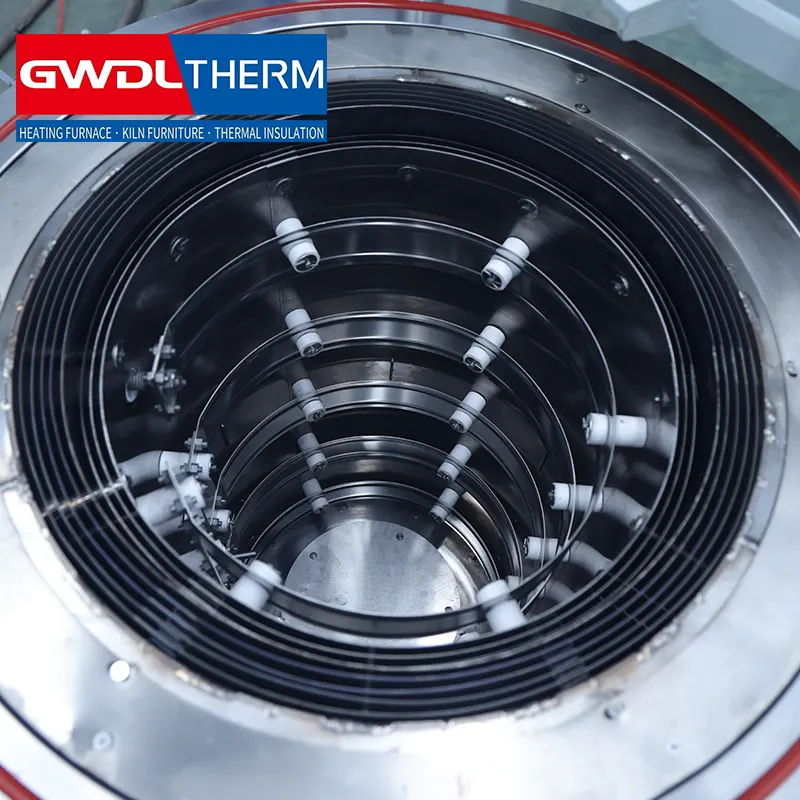
The heating element consists of molybdenum lanthanum alloy arranged in a horizontal annular configuration, capable of continuous operation at 1500°C with design maximum temperature of 1600°C. The Mo-La alloy offers superior high-temperature strength, excellent creep resistance, and minimal vapor pressure in vacuum environments. With a maximum heating rate of 0-10°C/min, the system ensures stable and controllable temperature elevation. Horizontal annular arrangement of both heating elements and connecting components promotes uniform radial temperature distribution.
Multi-Layer Metal Radiation Shield
The hot zone is surrounded by a sophisticated insulation package comprising 4 layers of molybdenum sheets (0.8+0.5+0.5+0.5mm) and 3 layers of 310S stainless steel sheets (0.5+0.5+0.5mm). The hot zone cover integrates with the furnace lid with identical layering as the barrel. This all-metal radiation shield structure ensures extremely low outgassing, high vacuum cleanliness, and superior thermal insulation performance, enabling the furnace to maintain high vacuum levels while minimizing heat loss.
Double-Layer Water-Cooled Furnace Shell
The vacuum chamber features a double-layer water-cooled structure with outer Q235 carbon steel (5mm thickness) and inner 304 stainless steel (5mm thickness). The top flange and lid flange are forged from 304 stainless steel with 40mm thickness and milled sealing surfaces with O-ring grooves. Custom O-ring fluororubber seals without joints ensure leak-tight performance. The static leakage rate measures 0.67Pa/h average, guaranteeing excellent vacuum integrity for prolonged high-temperature operations.
Precise Temperature Control and Measurement
Temperature detection is performed by a single-core tungsten-rhenium thermocouple with 0-1800°C design range. The Japan Shinkoden FP93 temperature controller achieves ±1°C control accuracy. The German Siemens S7-1200 PLC and 10-inch Kunlun Tongtai touchscreen provide comprehensive process management, supporting multiple interfaces for status monitoring, parameter setting, temperature programming, and data recording with remote communication capability.
Complete Gas Management System
The furnace supports hydrogen, nitrogen, and inert gas operations through dedicated inlet ports. The hydrogen inlet positioned at the bottom side and inert gas inlet at the top side of the chamber enable stratified atmosphere control. Hydrogen flow is regulated by manual valve, hydrogen-specific mass flow meter, and solenoid valve rated at 20SLM. Inert gas flow utilizes manual valve, float flow meter, and solenoid valve rated at 40SLM. An environmental hydrogen concentration detector installed beside the furnace triggers alarm and interlock functions when concentration exceeds safe limits.
Hydrogen Exhaust Combustion System
The hydrogen exhaust tail gas is safely processed through a dedicated vertical tube furnace combustion system. The exhaust gas enters the ceramic tube from the bottom and mixes with air to ignite when passing through the high-temperature zone. The tube section entering the heating zone is made of 310S heat-resistant steel, heated by silicon carbide rods at 800°C continuous operating temperature with 4kW power. The internal filling of foam ceramic slows gas rising rate to ensure complete combustion.
Comprehensive Safety Interlocks
The furnace incorporates multi-level safety protection including heating circuit phase-loss alarm, over-current alarm, thermocouple break alarm, and over-temperature alarm. The cooling water system monitors return water overtemperature and pressure anomalies. The vacuum system provides pump overheating alarm and leak rate abnormality alarm. The hydrogen system automatically stops hydrogen inflow when environmental concentration exceeds the threshold. In case of power failure, a differential pressure valve closes immediately; for short-term outages, the program pauses and resumes upon power restoration, while long-term outages trigger automatic termination with data preservation.
Technical Specifications
Parameter
Specification
Effective Working Zone
Diameter 250mm × Height 500mm
Maximum Design Temperature
1600°C
Continuous Operating Temperature
1500°C
Heating Element
Molybdenum lanthanum alloy, horizontal annular
Maximum Heating Rate
0-10°C/min
Insulation Material
99.5% alumina ceramic
Radiation Shield
4-layer Mo sheet + 3-layer 310S stainless steel
Sample Stage
Molybdenum, 5mm thick, 230mm diameter, 5 support legs
Furnace Shell
Double-layer water-cooled, Q235 outer + 304 inner, 5mm each
Top/Lid Flange
Forged 304 stainless steel, 40mm thickness
Leakage Rate
0.67Pa/h (static measurement average)
Vacuum Pump
Nanguang 2X-30 twin-stage rotary vane pump
Vacuum Valve
Pneumatic butterfly valve, KF40-KF25
Temperature Controller
Shinkoden FP93, ±1°C accuracy
PLC
Siemens S7-1200
Touchscreen
Kunlun Tongtai 10-inch with remote communication
Control Thermocouple
Single-core W-Re, 0-1800°C range
Pressure Transmitter
0-0.2MPa range
Vacuum Gauge
Ruibao resistive vacuum gauge with 485 communication
Hydrogen Flow Control
Mass flow meter + solenoid valve, 20SLM
Inert Gas Flow Control
Float flow meter + solenoid valve, 40SLM
Power Supply
380V, 3-phase 5-wire, 50Hz
Rated Power
65kW
Maximum Heating Power
30-40kW
Main Contactor
Schneider 125A 3P molded case
IGBT Power Supply
Yingjie integrated type with phase-loss, power-off, over-current alarms
Furnace Dimensions (W×D×H)
1300 × 1100 × 1200mm
Vacuum Pump Dimensions
800 × 800 × 700mm
Net Weight
1.2T
Packaged Weight
1.4T
Application Areas
Ideal for sintering and heat treatment of tungsten, molybdenum, tantalum, niobium, and other refractory metal materials under high vacuum or hydrogen atmosphere. The vertical top-loading structure and all-metal hot zone ensure exceptional purity and temperature uniformity for powder metallurgy and refractory alloy processing.
Suitable for high-temperature sintering of advanced ceramics, silicon carbide wafers, high-purity ceramic substrates, and electronic ceramic components. The hydrogen atmosphere capability and ultra-low leakage rate make it perfectly suited for oxygen-free processing in semiconductor and electronic material manufacturing.
Perfect for research institutions and industrial laboratories conducting material development, vacuum brazing, and controlled atmosphere heat treatment. The automated PLC control with programmable heating curves, vacuum levels, and gas flow timing enables fully automatic operation from pump-down to cool-down and sample retrieval.
Why Choose Us
Molybdenum lanthanum alloy heating elements with horizontal annular arrangement deliver superior high-temperature strength and creep resistance, ensuring stable performance at 1500°C continuous operation with design maximum of 1600°C.
All-metal hot zone with 4-layer molybdenum and 3-layer stainless steel radiation shield achieves 0.67Pa/h leakage rate, providing exceptional vacuum cleanliness and atmosphere purity for sensitive material processing.
Comprehensive safety interlock system covering heating, cooling water, vacuum, hydrogen, and power failure scenarios, combined with Siemens PLC and full automatic operation mode, ensures maximum operational safety and process reproducibility.
FAQ
Q1: What is the maximum operating temperature and heating element material of this furnace?
A1: The furnace has a design maximum temperature of 1600°C with 1500°C continuous operating temperature. The heating element uses molybdenum lanthanum alloy arranged in horizontal annular configuration, offering excellent high-temperature strength and creep resistance in vacuum environments.
Q2: What atmosphere types are supported and how is hydrogen safety ensured?
A2: The furnace supports vacuum, hydrogen, nitrogen, and inert gas atmospheres. Hydrogen inlet is at the bottom side while inert gas inlet is at the top side. An environmental hydrogen concentration detector triggers alarm and interlock to stop hydrogen inflow when concentration exceeds safe thresholds. Hydrogen exhaust is safely combusted through a dedicated vertical tube furnace system.
Q3: What is the vacuum performance and leakage rate?
A3: The furnace uses Nanguang 2X-30 twin-stage rotary vane vacuum pump with pneumatic butterfly valve. The double-layer water-cooled shell with custom jointless fluororubber O-rings achieves a static leakage rate of 0.67Pa/h average, ensuring excellent vacuum integrity.
Q4: What control system and automation capabilities are included?
A4: The furnace is controlled by Siemens S7-1200 PLC with 10-inch Kunlun Tongtai touchscreen. Users can set vacuum level, gas flow and timing, heating curves, and exhaust pressure for fully automatic operation. The system manages pump-down, gas filling, heating, natural cooling, nitrogen purge, and door opening in sequence, with pause-and-resume capability for short power interruptions.
Q5: What are the key safety features and power specifications?
A5: Safety features include phase-loss alarm, over-current alarm, thermocouple break alarm, over-temperature alarm, cooling water overtemperature and pressure alarms, vacuum leak alarm, hydrogen concentration alarm, and power failure interlock. The furnace operates on 380V 3-phase 5-wire 50Hz power supply with 65kW rated power and 30-40kW maximum heating power, protected by Schneider main contactor and Yingjie IGBT power supply.